
by David Madison
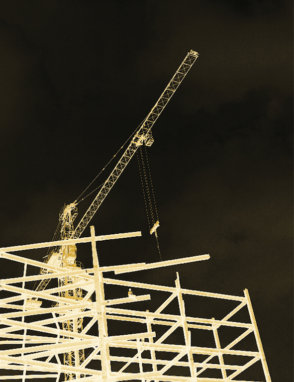
The skyline of the city of Kelowna is changing. Construction cranes can be seen perched precariously on the skeletal structures of steel and concrete at several locations. Are we on the way to creating a knock-off of the high-density centres of Vancouver’s English Bay or False Creek along the shores of Okanagan Lake?
Back in the early 1980s, Kelowna planners formulated a development plan for the area extending from the boat launch north of the yacht club to Brandt’s Creek. At that time, this land was largely industrial or vacant. They saw an opportunity to encourage a transition to high-density housing coupled with parkland. The result has been the transformation into what is now the Grand Okanagan Hotel, Lake City Casinos, The Dolphins, the Lagoons and the Discovery Point Resort, all of which frame the Waterfront Park on its east side.
This area is in contrast to the older residential neighborhoods east of Richter Street where small homes, many built before Kelowna became the largest city in the Okanagan, await the next stage of development. There are those who oppose the concept of high-density housing and cling to the North American ideal of single-family homes as the best possible residential solution. The problem is that there is not enough land to allow private homes.
The city population has increased by 25,000 since 1992. Nine thousand homes have been built to accommodate this growth and the resulting spread of urban sprawl has taxed transportation links and placed huge demands on water and waste systems. The 2004 Sprawl Report by Smart Growth B.C. placed Kelowna down in tenth position as the best developed city in the province. This was largely due to the rapid growth outside the city’s core area which creates the daily traffic grind. The decreased air quality because of these additional cars makes it clear that Kelowna needs to promote development upward, not outward.
And the growth is not slowing down. Keith Skinner, manager of inspection services at City Hall pointed out, “We had $140 million in construction as of May 3rd this year compared to $114 million for the same period last year.” Relating to building permits, “fourteen hundred units were created last year – so far this year we have 980 permits and it’s only half way through the year.” In 1973 the city had 50,000 residents. The population has now doubled and continues to do so at a rate of about 2% per year.
The numbers become frightening. The Smart Growth study shows that 68% of people who live in the city’s urban centre drive to work compared to 85% of those who live
in the suburbs. The steep land around the city does not allow easy walking or biking, so alternative transportation from the suburbs is difficult to promote. Add to this the fact that 40% of the city’s land is in the A.L.R. and this means that urban growth becomes fragmented – further stressing the transportation links. Almost 16% of the city’s available land is too steep or too close to water to be used for building. Subtracting that which is already in use for residential, commercial or industrial and we are left with only a bit over 13% of the total land base that is still vacant. If the population projections provided by the city are correct, we will have a city population of 160,000 by 2020 – a 60% increase over today’s figure. Where will those additional 60,000 people live?
Andrew Bruce, manager of development services for the City, hopes they will be living in one of the urban centres of Kelowna. “The cultural district in the central city, Rutland, South Pandosy, North Mission, Glenmore, Kettle Valley and the area around Springfield and Highway 97 are all becoming nodes for population growth.” He points out the logic of these centers for development. “ We already have the services in place there. There is local shopping as well. People who live there will not need to travel to get the things they need.” These clusters within the city may reduce peoples’ need to drive. Because Kelowna’s residents have an average of 1.8 cars per household, it’s easy to understand why we have traffic problems, even without the flood of tourists in their vehicles during the summer.
So with rapidly growing numbers moving to the city and limited land – what’s the outlook? High-rise development seems the answer. “Population densification of the urban centre” says Bruce, “will allow the city to accommodate more people while maintaining the highest level of services.”
Sharon Alfke, sales representative with Point of View Marketing at Discovery Pointe, notes: “when we offered these units for sale in May of 2002, we sold 1/3 of them in the first 10 hours.” The tower contains 131 units ranging in size from 875 square feet to 4000 square feet. Initial pricing was in the $275 – $300 per square foot range, but has increased. Sharon mentions a client who purchased a unit at the initial sale with a $12,000 down payment. “The person sold the unit (which is still being built) for a profit of $41,000 after two years.” The top floor penthouse could be bought for around $3.7 million.
Another impressive new tower has reached its full height near Springfield and Dilworth. Park Place is an 18-story structure with over 100 units. The only unit that was still for sale as of this writing was the penthouse at 4770 square feet for $1.5 million plus requiring over $10,000 per month for the mortgage and strata fee.
Park Place conforms to Andrew Bruce’s concept of urban nodes of high density population. It is close to the Mission Creek Regional Park and is only a short walk to the Orchard Park Shopping Centre and other major shopping. The list of features in the building is impressive and there is a definite emphasis on secure luxury. The fact that none of the units, except the penthouse, is still on the market testifies to the popularity of this type of residence.
A stroll through the ‘community’s living room’ in the Cultural District will reveal a large open parcel of vacant land known as the railway land. This property is owned by Canada Lands Corp., the real estate arm of C.N.R., and is slated for development very soon. The long-term plan is for 1700 units housing 3500 people in the downtown core. The first phase will be a 20-story tower with about 90 units to be started in the fall of 2004. The southernmost piece of this property is slated for a hotel development.
There are many public benefits to increasing the density of the downtown. Development permits help to pay for the building of additional parkland. The waterfront park by the Lagoons and Dolphins was largely paid for by the developers (66%) and has become a major attraction for the enjoyment of all.
What’s in the crystal ball for the future? Stuart Park will add more green space along the waterfront near the present location of the Kelowna Yacht Club. Discussions are underway to determine the best location for the clubhouse – perhaps overlooking the water on pilings might be an option. The boat moorage will remain. The seniors centre north of the yacht club will be moved making that land available for public use. Rumors that the existing Willow Inn will undergo a major development are still unconfirmed, but there has been strong interest in that property. Andrew Bruce adds, “We need to also encourage more ‘class A’ office space in the downtown core. This is defined as high-rise and high quality offices such as law firms might use.”
Imagine a city where people live in the centre, walk to work, stroll park trails nearby, support local arts, attend the theatre, moor a boat, and have a broad choice of dining and night life. That is Kelowna’s future as it grows upward.
Since David Madison wrote this feature, there have been more construction developments underway.
Read more of the original stories celebrated in our 30th-anniversary issue.

Predictably Irrational: frank talk with author and researcher Dan Ariely
Okanagan Life Editor Paul Byrne spoke with Dan Ariely about his book, Predictably Irrational, his TED talks and his seminal research that shines much needed light on the hidden forces that shape human decisions, behaviors and also answers the questions about why...

Date book: Summer happenings in the Okanagan
As seen in Okanagan Life Magazine. Maurer Exhibition Penticton June 2-July 28 The work of Naramata artists Florian and Erika Maurer is featured at 557 Artist Block at 262 Main Street. Architect, Florian, and gardener, Erika, are known for their commitment to...
The language of culture
En'owkin Centre provides vital support for Syilx traditions “Swit t? t?twit i kwu acmikstms?” Shane Kruger walks to the front of a class at the En’owkin Centre and stands before his fellow students of the preforming arts. His posture grows tall and his voice ignites...

A Good End: a look at doctor-assisted death
As the June 6 deadline approaches for the federal government to impose doctor-assisted death legislation, we revisit one of our stories looking at both sides of the right-to-die debate within the Okanagan. As poet Dylan Thomas urged, we do not go gently, we fight with...
Centennial blossoms at Summerland Gardens
Major events planned for 100th anniversary of Summerland Ornamental Gardens They’re less likely to be wearing long skirts and fashionable little hats, but 100 years after the Summerland Ornamental Gardens were first created, people still come to picnic on the...
Kelowna business coalition takes on distracted driving
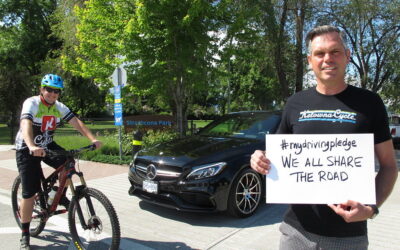
A group of Kelowna businesses has come together to keep Kelowna’s roads safer, launching an online pledge and contest at mydrivingpledge.com. Distracted driving is becoming a higher risk every year for residents in the Southern Interior. These local businesses are...
0 Comments