
A simple, quiet space…for all people who are open to the presence of God’s spirit, to find sanctuary, renewal and recreation, alone or in the community.
By Karen Silvar
I Chen, architect
Be it at home or chapel, she’ll design it as a sanctuary
Telling someone their house is not a home is an insult. By definition, a home is where one lives and a house is a building for human habitation.
When designing a home, there are infinite possibilities. This is where a designer can help.
Penticton architect Isabel Chen believes buildings should grow from and work in harmony with their surroundings. A building’s sculptural form is a response to function, site, client and an unwavering commitment to a design concept, says Chen.
She not only designs homes but other functional buildings as well.
The Chalmers Chapel in Naramata, for example, was designed by Chen. It began with a statement: “A simple, quiet space…for all people who are open to the presence of God’s spirit, to find sanctuary, renewal and recreation, alone or in the community.”
Like a chapel, a home is a sanctuary, says Chen. A custom-designed home must meet the needs of the family who will inhabit it. Of the 53 homes that Chen has designed over the past 14 years, only three families have moved on from them, she says.
Through the design process, clients uncover their needs, what they like and why. A key element in design is to prioritize requirements. The smaller the budget and building, the more need there is for a designer who can maximize on the opportunities, says Chen.
Things to consider when designing a home include the day-to-day activities that occur in your home, whether you cook or work at home if you have children or pets, how often you entertain, how often you have overnight guests and your budget.
More is not necessarily better, says Chen, who has designed homes from 700 up to 7,044 square feet. “I live in a 700 square foot fruit pickers’ cabin and I find it adequate,” says Chen, who lives there with her partner and their dog. “In summertime, visitors bring tents.”
Every building Chen has designed is unique like her clients. The curse of an architect is to be labelled with a style.
Chen takes a holistic approach to design and strives to encompass concepts like solar orientation, lighting both natural and artificial, circulation, ventilation and creative use of space. Her advice is to work with a landscape professional from the beginning of a project.
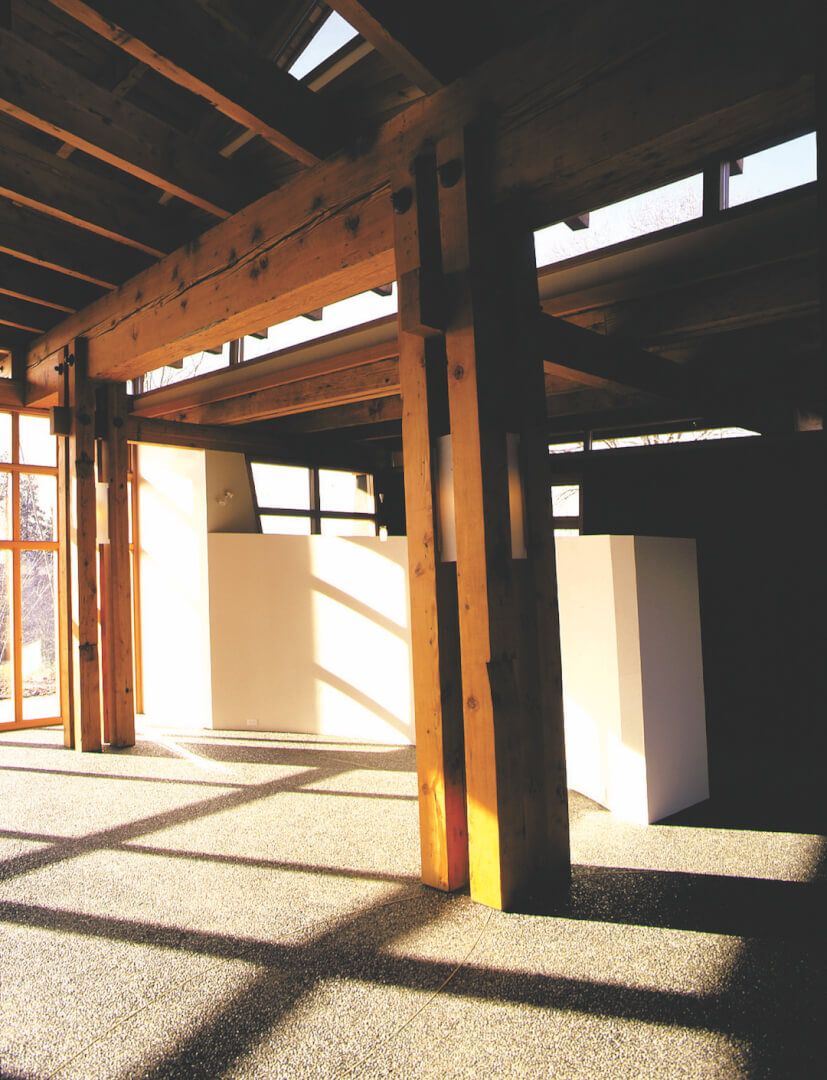
Many people have told Chen that they could see themselves living in the Chalmers Chapel. The building itself is 1,415 square feet and designed to feel comfortable for one person, as well as a group of 20 people joining hands in a circle of prayer and song.
The chapel is post-and-beam design and uses recycled timbers. The north-south orientation of the building takes advantage of passive solar heating. In the winter, the sun enters the building through the expanse of glass on the south elevation heating the space in addition to the in-slab floor heating. In summer, the sun passes high overhead and the combination of clerestory windows and concrete flooring keep the space cool without the need for air conditioning.
In the future, Chen would like to see “more higher quality small residences” built within existing city infrastructure.
“I love renovation and the idea of reuse,” she said. “A good reno is one that does not look like it’s been done.”
When it comes to building your own home, Chen’s advice is to “do your homework on yourself, on the site and on the neighbourhood and its connections.”
Chalmers Chapel
Size: 1,415 square feet
Cost of construction: $193,430
Building materials:
- Recycled timbers
- Acrylic stucco
- Concrete sink counters
- Exposed aggregate floor with brass circular joints
- Windows and doors made from recycled timber
Completed: 1998 Location: Naramata
Architect: I Chen Architect Builder: Rick Grandbois
Design tips for building your home
- Make your roof work for you by using the space it creates.
- Expose the bones of the structure for honesty.
- Achieve intimate and varied space by using lighting, walls, flooring and different ceiling heights.
- Think of circulation as connective tissue between spaces.
- Bring the outdoors in to expand your interior spaces.
- Design outdoor spaces to extend and maximize their use in spring and fall.
- Make every space a delight to be in especially the laundry room if you do a lot of laundry.
Read more of the original stories celebrated in our 30th-anniversary issue.

Okanagan Real Estate Outlook
Depending on how you read the statistics, the glass is either half empty or half full when it comes to forecasting real estate in our region. Traditional construction is no longer the norm, with prices hitting the high end of the tolerance scale for single-family...

Kelowna Rockets begin WHL playoffs
The Kelowna Rockets open the first round of the 2015 WHL playoffs against the Tri City Americans. This is the eighth consecutive appearance in the post season for the Kelowna Rockets, reaching the playoffs 19 times in the franchise's 20-year history. The Rockets...

Okanagan Wine Festival Heralds Rite of Spring in Valley Vineyards
The Okanagan is set to enjoy its annual Spring Wine Festivals now in its 21st year. Wine lovers can soak up the record-breaking warm Valley weather with a glass in hand at over 120 member wineries and indulge in more than 90 culinary and wine activities from Osoyoos...

The Osoyoos Oyster Festival Returns
Four-day oyster extravaganza features West Coast oysters and Canadian wines at the Best of the Okanagan resorts and restaurants The Osoyoos Oyster Festival returns to the South Okanagan, April 22-25. Now in its fourth year, the event showcases oysters produced by West...

Find your vinotype: There’s a reason you like the wines you like
There’s a reason you like the wines you like; see where your taste buds fit The concept of “vinotypes” challenges conventional thinking about wine. The notion of supertasters—people with heightened sensitivity to a relatively narrow group of compounds—is bandied about...

Friday: Kelowna offers trees for first 400 households
Helping to grow Kelowna’s urban canopy is as easy as one, two, tree. The City of Kelowna’s annual NeighbourWoods program, a residential planting initiative, will start on Friday, March 27. Open to Kelowna residents, the program has a limit of one tree per household....
0 Comments